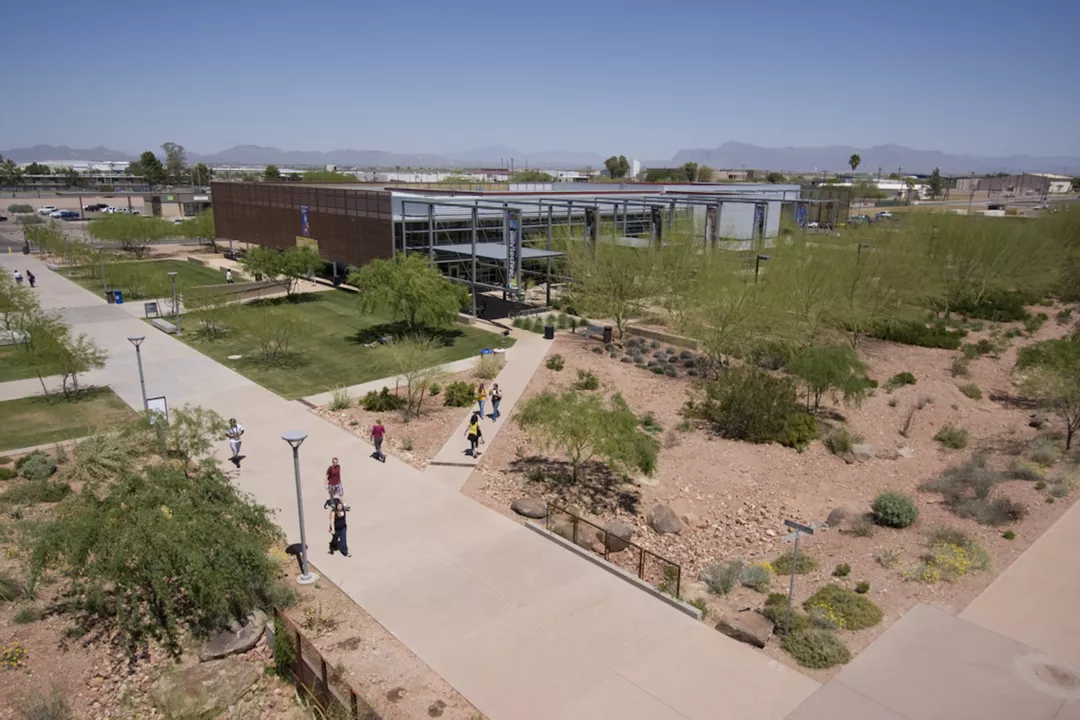
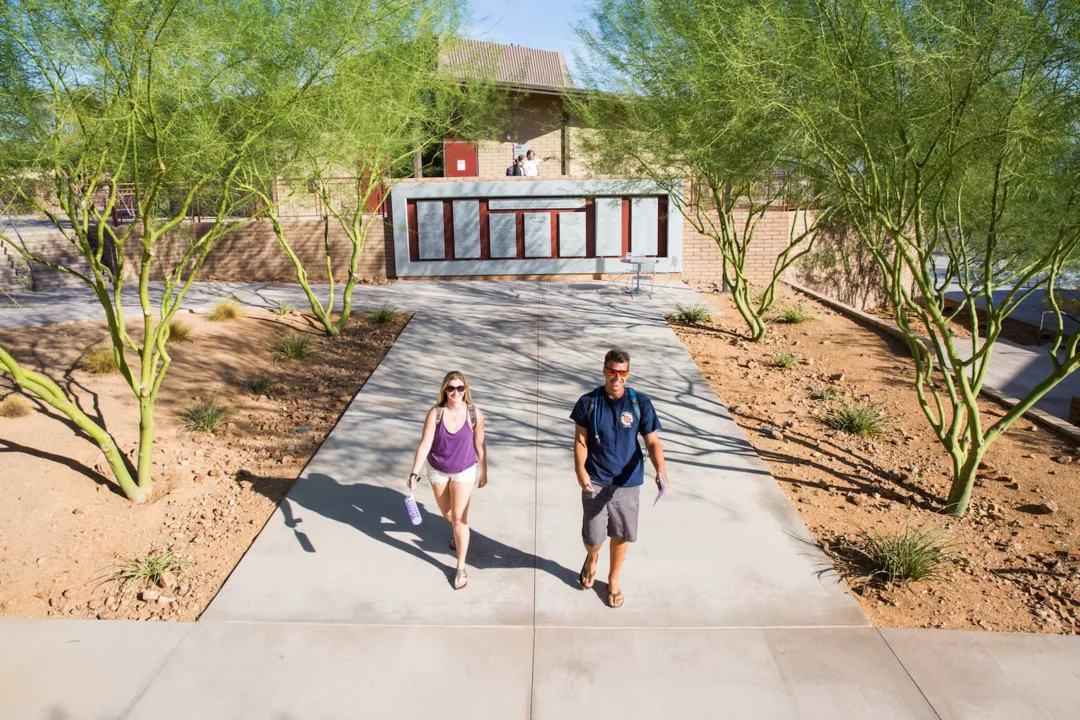
The MLA program at ASU is designed to enable students to engage with the community in projects that focus on improving the ecological and social health of the urban environment. Emphasis is on sustainable outdoor environments. In the United States, most state registration boards require a degree from an accredited professional degree program as a prerequisite for licensure.
The graduate landscape architecture program projects can include large-scale work encompassing urban design, landscape reclamation, open space preservation planning and landscape ecological design, and projects at the more intimate scale of a neighborhood park or residential backyard. Emerging areas of focus include biotechnical design, construction of greenways, green roofs, living walls, urban agriculture as well as the design of healing environments.
This program is for applicants who have completed a four-year bachelor's degree with a major in landscape architectural studies. The undergraduate degree must be granted by an institution that offers the Landscape Architectural Accreditation Board (LAAB) accredited degree program in landscape architecture.
As an accredited Master of Landscape Architecture degree program, the curriculum is intended to prepare students for landscape architecture professional practice and advanced study at the doctoral level. The Design School is committed to the merging of global and local contexts and concerns and, toward this end, graduate students in their final year go abroad for two weeks as part of their studio course. To date, students have traveled to Argentina, England, Ethiopia, Germany, Japan, the Netherlands, Rwanda, Spain and Turkey. The school also offers a number of summer study abroad programs in an effort to extend the student opportunities for global engagement.
Since 2011, when the first class of students graduated with master's degrees in landscape architecture, ASU alumni have found employment with nationally recognized landscape architects, in multinational firms and within public municipalities and agencies.
| Level | Masters |
| Discipline | Architecture |
| Duration | 24 months |
| Intakes | Jan, Aug |
| Application Fees | USD 0 |
| Tuition Fees | USD 25200 |
| Campus | Tempe |
| Language proficiency (minimum) | |
| IELTS | 6.5 |
|---|---|
| TOEFL | 80 |
| PTE | 65 |
| Duolingo | 105 |
| Exam proficiency (minimum) | |
| SAT | Not Required / Waiver |
|---|---|
| ACT | Not Required / Waiver |
| GRE | Not Required / Waiver |
| GMAT | Not Required / Waiver |
Minimum GPA - 77%
 219
219
 156
156
 55
55
 --
--
QS Quacquarelli Symonds is the world’s leading provider of services, analytics, and insight to the global higher education sector, whose mission is to enable motivated people anywhere in the world to fulfil their potential through educational achievement, international mobility, and career development.
THE (Times Higher Education) has been providing trusted performance data on universities for students and their families, academics, university leaders, governments and industry, since 2004. We create university rankings to assess university performance on the global stage and to provide a resource for readers to understand the different missions and successes of higher education institutions.
The Academic Ranking of World Universities (ARWU) was first published in June 2003 by the Center for World-Class Universities (CWCU), Graduate School of Education (formerly the Institute of Higher Education) of Shanghai Jiao Tong University, China, and updated on an annual basis
The "Webometrics Ranking of World Universities" is an initiative of the Cybermetrics Lab, a research group belonging to the Consejo Superior de Investigaciones Científicas (CSIC), the largest public research body in Spain. CSIC is among the first basic research organizations in Europe. The CSIC consisted in 2006 of 126 centers and institutes distributed throughout Spain.